Thailand’s Invasive Risk from Non-native Ornamental Fish: The Blackchin Tilapia Case and Governance
The spread of blackchin tilapia should not be seen only as a problem of one fish species or as something limited to a single country. It should be understood as a global lesson: the risks of cross-border movement of aquatic species, especially through ornamental fish trade, breeding imports, scientific research, illegal imports, and the release of unwanted pet fish into natural ecosystems.
From an academic perspective, evidence from multiple countries shows that the appearance of non-native aquatic species is not driven only by commercial aquaculture. It is also linked to an increasingly complex aquatic animal trade system, including ornamental fish markets, online stores, social media platforms, international logistics, and gaps in regulatory oversight. When live aquatic organisms are moved from one ecosystem to another without sufficient control, monitoring, and escape-prevention mechanisms, they can pose risks to ecosystems, fisheries economies, and national biosecurity.
Blackchin Tilapia Traits: Conditions for Establishing Populations in the Wild
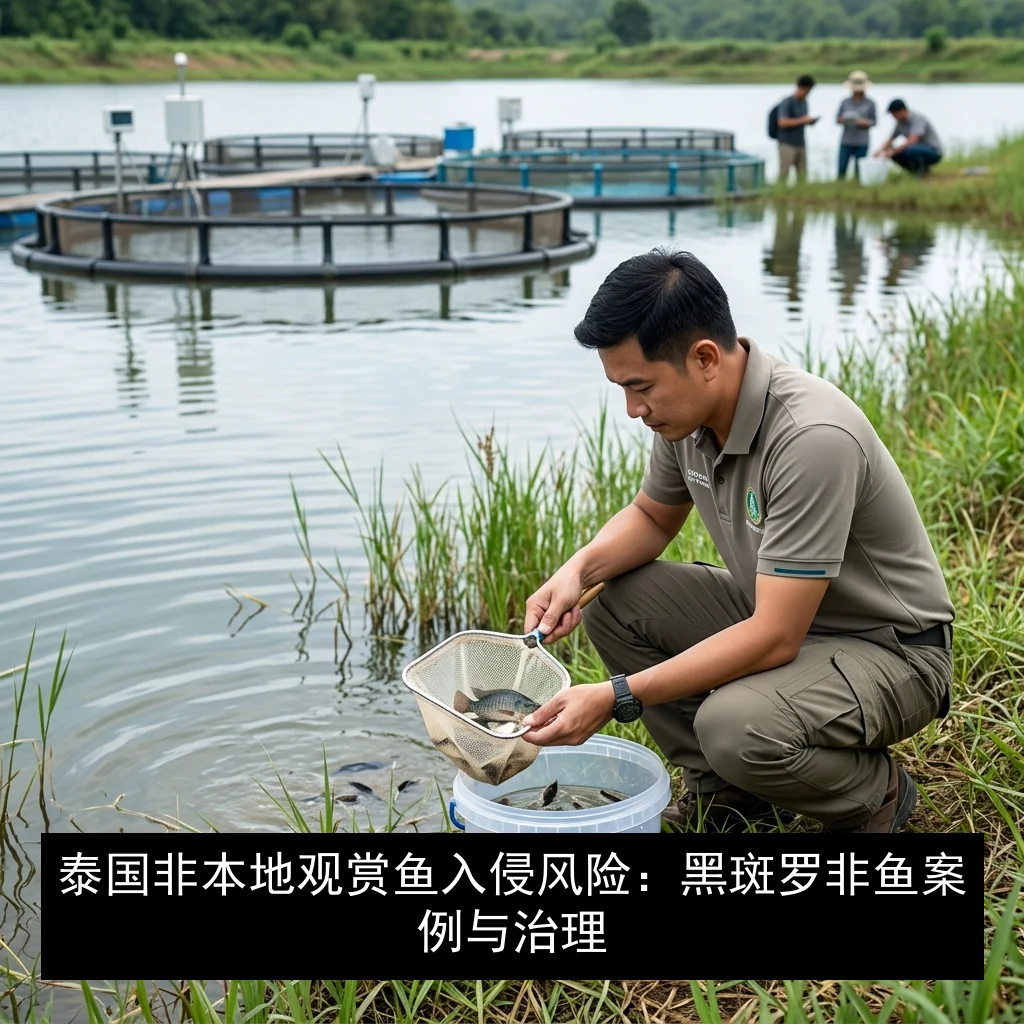
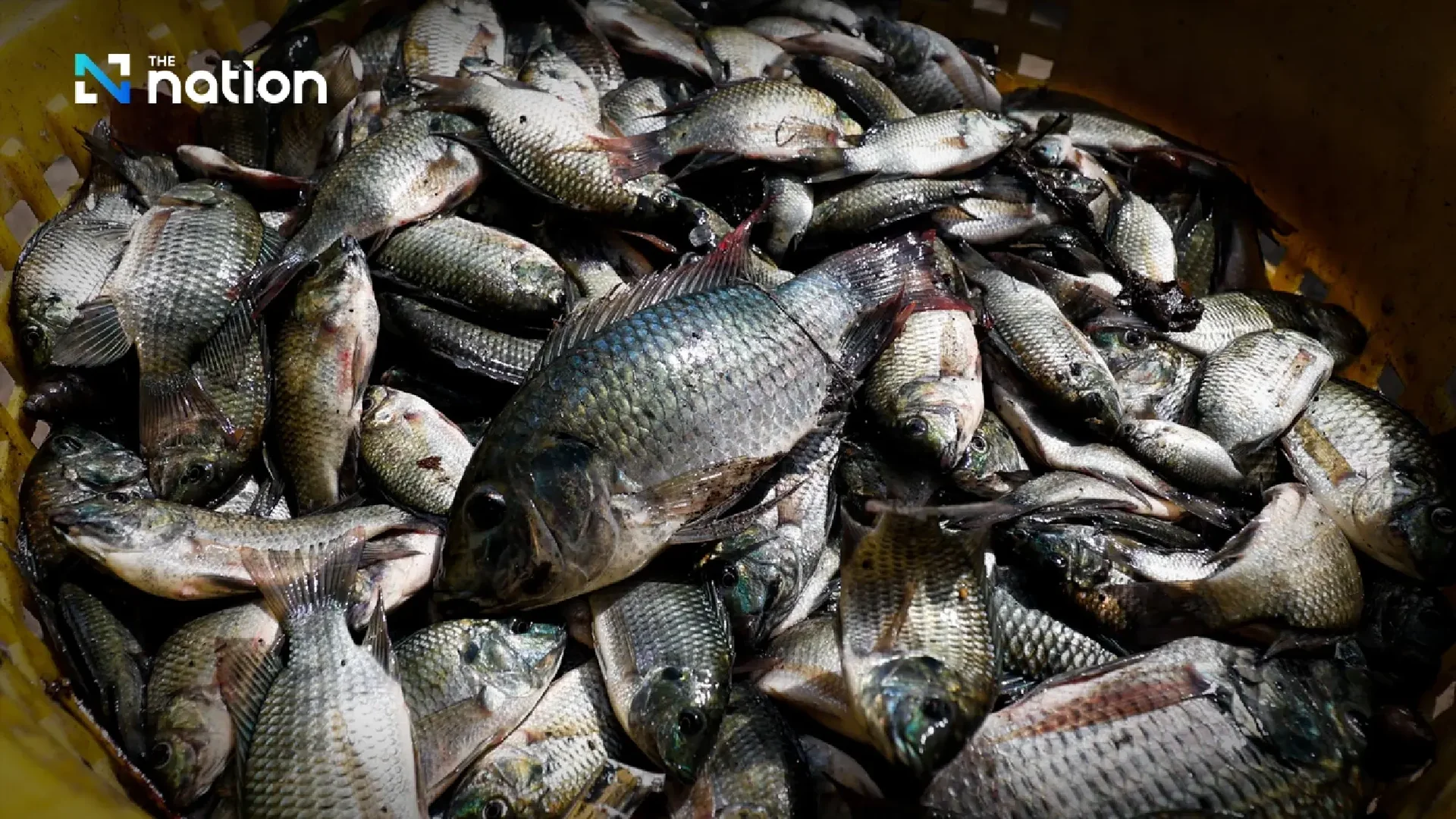
Blackchin tilapia (Sarotherodon melanotheron) is a cichlid native to West Africa. It is highly adaptable and can survive in freshwater, brackish water, and marine environments, and it can also reproduce successfully in tropical conditions. For that reason, it is an important case of a non-native aquatic species: if it escapes from a controlled system, it may establish populations in the wild.
In many countries, reports of blackchin tilapia and other non-native aquatic species are associated with multiple pathways, including aquaculture, ornamental fish trade, imports for education and research, escapes from small-scale breeding or holding facilities, and the release of unwanted pet fish into the environment. The key issue is therefore not to assign blame to a single operator, but to assess whether national systems for regulating aquatic animal imports are robust enough.
The Cross-Border Chain of Ornamental Fish Trade: Legal and Illegal Sides Coexist
The ornamental fish market is one of the fastest-growing segments of the global pet trade. Many tropical fish are attractive because of their bright colors, unique shapes, and high market value, so large numbers are traded across borders through both legal and illegal channels. Although most trade is legal, countries still face problems such as inaccurate species declarations, unauthorized imports, smuggling, and hard-to-monitor online sales.
Several factors make this issue difficult to control: many exotic fish are small, easy to transport, and easy to hide in boxes or plastic bags; trade names used in the ornamental fish market often do not match scientific names, making species identification difficult for enforcement officers, especially at juvenile stages or when their appearance resembles permitted species. Online trade further increases enforcement difficulty because sellers and buyers no longer rely on physical stores. At the same time, government databases are often fragmented across customs, fisheries, environmental agencies, police, and online platforms, making information difficult to integrate.
Multi-country Cases Suggest That the Same Species May Enter the Environment Through Escape or Release in Different Regions
In the United States, lionfish are native to the Indo-Pacific region. Research shows that they first appeared in Florida waters in the 1980s and later became a non-native species in the Atlantic and Caribbean. Researchers believe their appearance may have been linked to aquarium release or escape. This case shows that fish prized for their beauty in aquariums can become hard-to-control predators if they reach the wild, lack natural enemies, and reproduce quickly.
In Brazil, studies on the ornamental fish trade have found that social media has become an important channel for selling freshwater and marine ornamental fish. Sellers can promote, negotiate, and deliver fish without relying on formal retail stores, making government oversight more difficult: transactions are decentralized, fast, and geographically dispersed.
In Australia, research has recorded that some aquarium fish have established populations in the wild, including guppies, swordtails, certain cichlids, and other non-native species. Many cases began with aquarium keeping and later entered natural waters after fish were released or escaped. As a result, Australia places strong emphasis on its “import-permitted species list” and applies strict controls to high-risk aquatic species.
In Europe, although the legal framework and import controls for aquatic species are relatively strict, the EU still emphasizes supply-chain transparency, accurate species identification, and source traceability. Europe’s lesson is clear: even with a strong legal framework, insufficient trade transparency can still create regulatory loopholes.
In Asia, the Philippines case is especially relevant to Thailand. Both are tropical countries with similar coastal ecosystems. In 2015, blackchin tilapia was recorded in Manila Bay. Researchers believe it may have entered through aquaculture, ornamental fish trade, or release into natural waters. This reflects a higher risk in tropical countries: natural conditions are more favorable for non-native aquatic populations to establish.
Thailand is one of the world’s important centers for ornamental fish breeding and export. The country has strong fish-farming capacity, experienced operators, and export markets. But Thailand also faces risks of introducing exotic fish, predatory fish, and non-native aquatic species, similar to other countries. Key concerns include informal import channels, online sales of exotic fish, release of fish that are no longer wanted into the environment, the lack of a centralized database for non-native aquatic species, and incomplete data integration among customs checkpoints, fisheries checkpoints, shops, farms, and online platforms.
Blackchin Tilapia in Thailand: From a Case to Systemic Governance
Thailand’s blackchin tilapia case should be used as a systemic lesson, rather than simply placing responsibility on a single actor. Public information shows that media reports and government reviews in 2024 also mentioned historical export records involving several operators, and some information indicated that at least 11 exporters appeared in international trade databases.
However, appearing in a trade database does not by itself prove the reason the species entered a natural ecosystem. Further scientific evidence is still needed, such as genetic analysis, pathway investigation (tracking its possible routes of movement), and post-import management information. The core academic question therefore becomes: how can governance of non-native aquatic species be strengthened to prevent future risks?
Possible Impacts and Governance Principles: Prevention First
Once exotic fish and non-native aquatic species escape into natural ecosystems, the impacts may occur at multiple levels, including competition with native fish for food and habitat, predation on juvenile fish and shrimp, mollusks and small aquatic organisms, the introduction of new diseases and parasites, biodiversity loss, and effects on the livelihoods of fisheries and aquaculture, as well as increased public spending for long-term control. The key principle is prevention before the problem occurs. Once a non-native species establishes a population in the wild, complete eradication is often extremely difficult, and long-term control can also be costly and time-consuming.
Policy Tool 1: Establish Positive and Negative Species Lists
Policy responses should begin with clear species lists, including both positive and negative lists. A positive list identifies aquatic species assessed as low risk and allowed to be imported and kept. A negative list identifies prohibited species, such as predatory fish, fast-breeding species, species with invasion records in other countries, and species known to carry diseases. The goal is not to ban ornamental fish trade entirely, but to distinguish low-risk from high-risk species.
Policy Tool 2: Pre-import Risk Assessment
The second measure is to establish a risk assessment system before import approval. The responsible agency should assess whether the species has an invasion history in other countries, whether it can survive in Thailand’s water conditions and climate, whether it can reproduce rapidly, whether it is predatory, whether it may carry diseases or parasites, and whether it would be difficult to remove if it escaped.
Policy Tool 3: Border Inspection and DNA Barcoding
Another important measure is to strengthen border inspection through DNA barcoding technology. Many exotic fish look similar, especially at the juvenile stage, so visual inspection alone may not be sufficient. Building a DNA reference database for high-risk aquatic species can help fisheries and customs officers identify species more accurately.
Policy Tool 4: Centralized Data Systems and Anomaly Alerts
At the data system level, Thailand should develop a centralized database linking importers, exporters, farms, shops, permits, species, import volumes, transport routes, and violation records. If the system detects unusual patterns, such as repeated imports of high-risk species or trade names that do not match scientific names, it should automatically trigger alerts.
Policy Tool 5: Online Trade Regulation and Public Education
Regulation of online trade is also essential, because a large share of exotic fish trade has moved to digital platforms. The government should work with online platforms to prohibit posts about banned aquatic species, require identity verification for sellers of high-risk species, remove illegal listings, provide public reporting channels, and use AI tools to identify high-risk sales ads. Public awareness is also very important. National campaigns should deliver a clear message: do not release exotic fish into natural waters.
The government should keep communicating that exotic fish should not be released into rivers, canals, lakes, ponds, or the sea, because they may cause problems for entire ecosystems. A take-back or handover system for aquarium pets that are no longer wanted should also be established.
Industry Coordination: The Ornamental Fish Industry Should Not Be Viewed as the Problem Itself
At the same time, the ornamental fish industry should not be treated as a problem by default. Many operators comply with the law and have strong technical capacity. The government can support responsible operators through certification systems, such as “green ornamental fish shops,” farms free of prohibited species, traceability systems, biosecurity standards, and training for sales and breeding staff. These measures can give compliant businesses an advantage in competition while squeezing the space for the illegal market.
Thailand’s Strategic Direction: From Reactive Control to Preventive Governance
For Thailand, the strategic direction should be to move from waiting to respond after problems appear to preventive governance before problems arise. This may include establishing a national monitoring center for non-native aquatic species, building a national database for imported ornamental fish and exotic fish, implementing QR-based traceability for importers and shops, increasing penalties for illegal imports of prohibited aquatic species, setting up DNA barcoding laboratories at key checkpoints, cooperating with online platforms, and building a reporting network that covers citizens, anglers, farms, and academia.
In short, illegal imports of ornamental fish and exotic fish, combined with the broader cross-border movement of aquatic species, are shared challenges faced by many countries, including the United States, Europe, Brazil, Australia, the Philippines, and Thailand. The core issue is not to ban ornamental fish trade, but to ensure that trade is legal, transparent, traceable, and does not create long-term costs for the natural environment.
The blackchin tilapia case should serve as experience for upgrading national biosecurity, traceability, and digital enforcement systems. If Thailand can build a strong and modern governance framework, it will be better able to balance the development of the ornamental fish industry, the responsibilities of operators, and the long-term protection of national biodiversity.